When Lightning Strikes
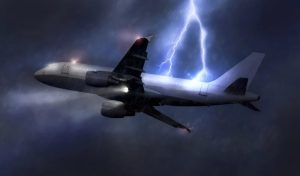
Heavy rain pours outside. Dark clouds cover the sky, and the atmosphere is thick with tension. A commercial airliner, carrying dozens of passengers, climbs through the storm. Suddenly—a flash. A bolt of lightning strikes the aircraft. A blinding light, a burst of sound, and then… nothing. No crash, no emergency. The plane continues as if nothing happened.
How is that possible?
Because in modern aviation, a lightning strike is no longer a catastrophe—it’s a standard part of flight operations.
Lightning and Planes: A Common Encounter
Every year, the Earth is struck by lightning over 25 million times. Statistically, every commercial aircraft is hit by lightning at least once a year. This might seem alarming to passengers, but engineers and pilots see it as routine.
When lightning strikes an aircraft, it usually enters through one point—such as the nose or wingtip—and exits through another, like the tail or opposite wing. The electric charge travels along the plane’s exterior, made from conductive materials designed to safely channel the energy.
The people on board? They’re safe inside, completely unaware or only faintly aware of what just happened.
How Aircraft Withstand Lightning
Airbus aircraft, like the A320, A350, and others, are built with protection in mind. Their bodies are composed of aluminum alloys and composite materials with metallic mesh, which act like a Faraday cage—a concept where electric charges stay on the outside and do not penetrate the interior.
All critical systems—avionics, flight controls, communications—are shielded against electromagnetic interference. Electrical grounding paths are built into the structure, and fuel tanks are designed to prevent sparks, even under extreme conditions.